
From Adjustment to Integration
When the Chair Becomes an Extension of You.

Full Fuctions Demo
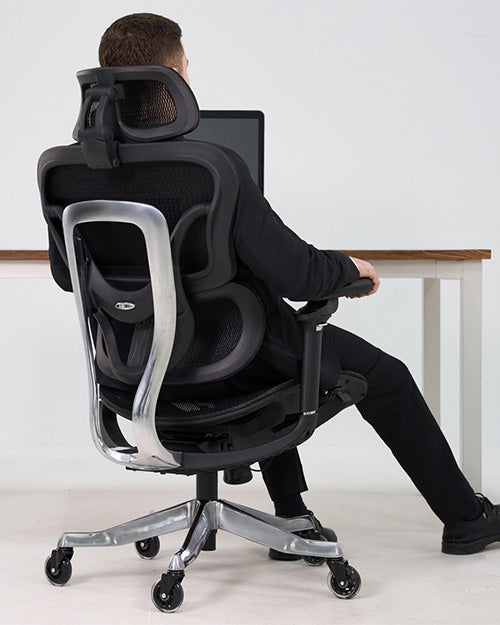
The Burden of Over-Adjustment: A Never-Ending Negotiation
The common promise of an "ergonomic chair" is a list of levers and knobs—adjustable lumbar, 3D armrests, a tilting seat. It presents a puzzle for you to solve. The problem isn't the adjustments themselves; it's that they demand your conscious attention. Every time you shift to reach the phone or lean into a new task, you're pulled out of your flow—forced to locate the right lever, find the right setting, and re-settle. The chair becomes not a tool for work, but a project in itself.
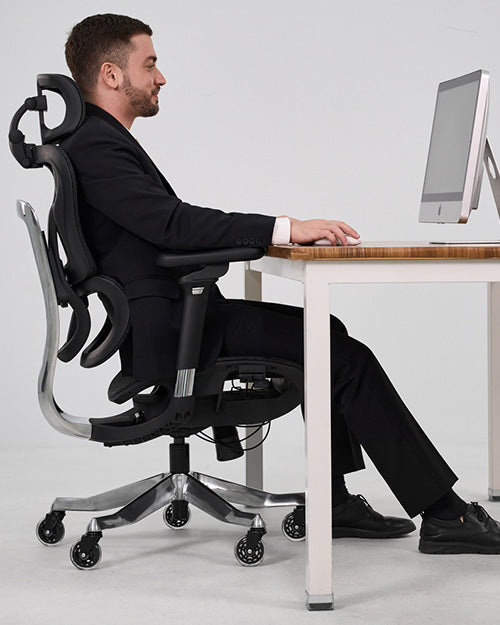
Design for Unbroken Focus
We envisioned a different experience: not a chair you must interrupt your work to adjust, but one that responds through natural posture shifts alone. The goal isn't to eliminate the need for support changes—your body moves, and support should move with you. The goal is to make those transitions feel instinctive. When your chair is designed this way, re-adjusting becomes a seamless, almost unconscious act. Your posture is supported, and your mind remains wholly in the foreground.
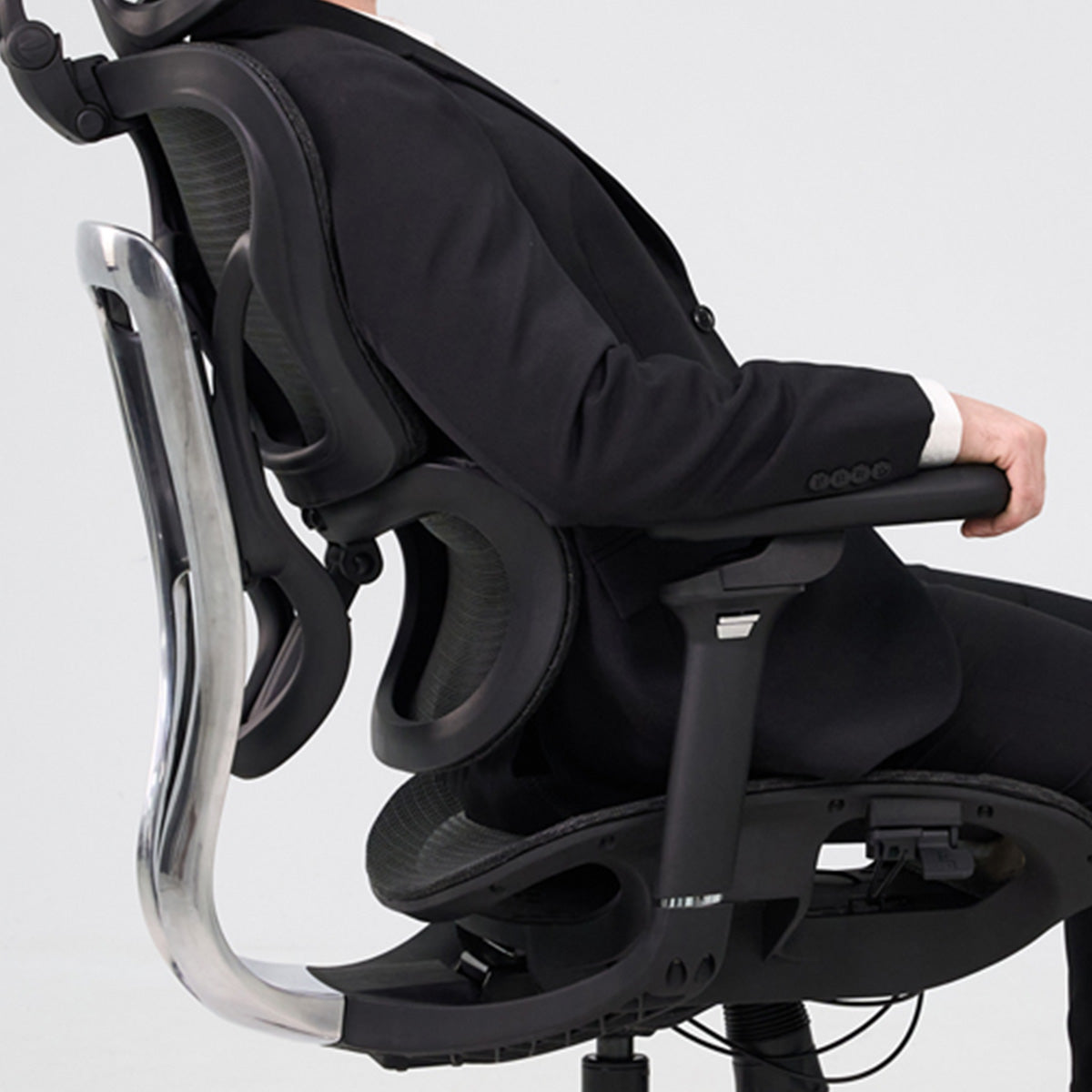
Adaptive & Dynamic Lumbar Support: Tuned by Your Posture
Our lumbar support is designed with a dynamic, multi-position range—not a fixed pad. As you sit upright, lift your chest, and settle your shoulders back, the support responds by advancing forward across four distinct positions. It takes a few mindful posture shifts to find your ideal setting, but once you do, the support stays locked where you need it, maintaining consistent, even pressure along your spine's natural curve. It's not a one-time adjustment—it's a calibration between you and the chair.
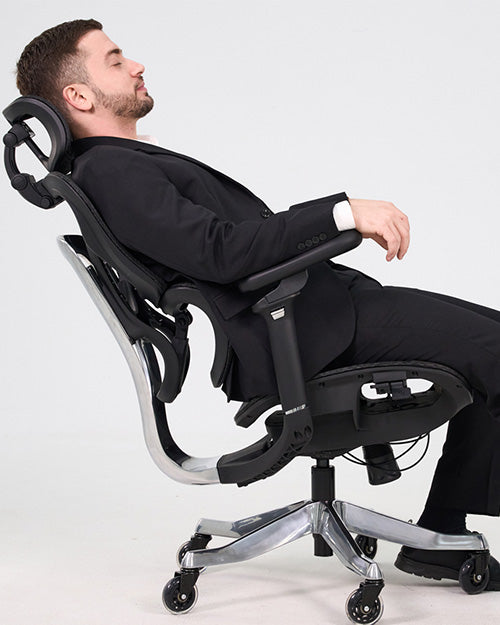
Recline as a Mode of Thinking
This intelligence extends to recline. The four-position backrest, with its independent tension adjustment and multi-stage lock, allows for a 150-degree range of motion. This is not a binary switch between “upright” and “laid back.” It is a spectrum of engagement. You can lock it firmly upright for intense focus, set a gentle resistance for rhythmic rocking that aids contemplation,At each of the four locked angles, the chair holds you securely, while the adaptive lumbar and synchronized mechanisms ensure continuous, full-body support. The recline becomes not an escape from work, but a different mode of thought within it.
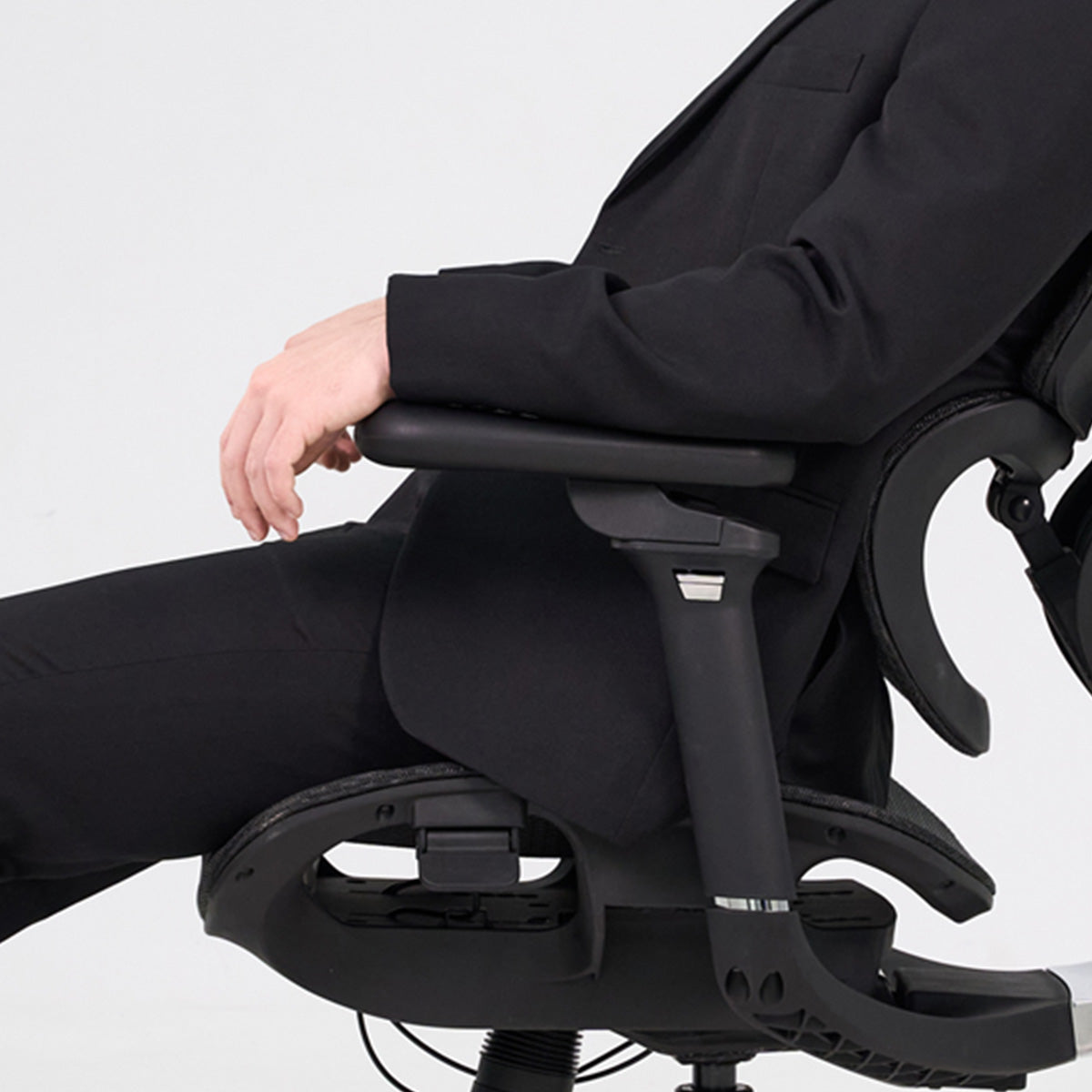
4D Armrests: Relieve Tension, Sustain Focus
Similarly, the 4D armrests exist to eliminate the hunt for elbow support. Their true purpose is to provide a continuous platform of stability for your forearms, whether you’re typing, mousing, or gesturing. By moving freely in every plane, they ensure your shoulders remain unlocked and relaxed, preventing the creeping tension that short-circuits focus.
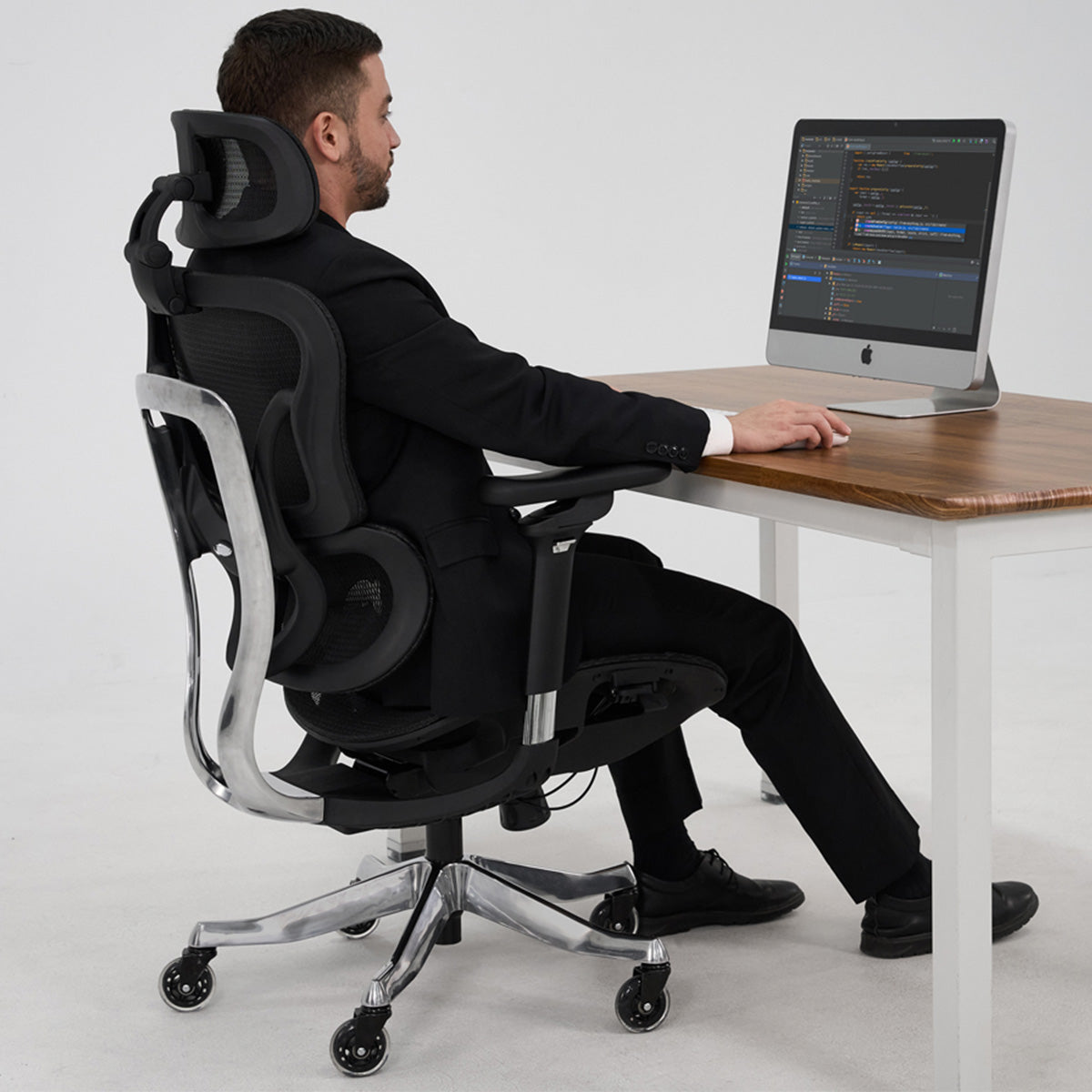
Frame and Mesh: The Intelligent Cradle
This principle of active support culminates in the marriage of the solid aluminum frame and the high-tensile Wintex mesh.The frame provides a foundation of absolute rigidity—no flex, no wobble, no energy-sucking instability. The mesh, in turn, acts as a intelligent suspension, distributing weight evenly and responding to your micro-shifts without bottoming out. Together, they create not a seat, but a personalized, weightless cradle that moves with you.
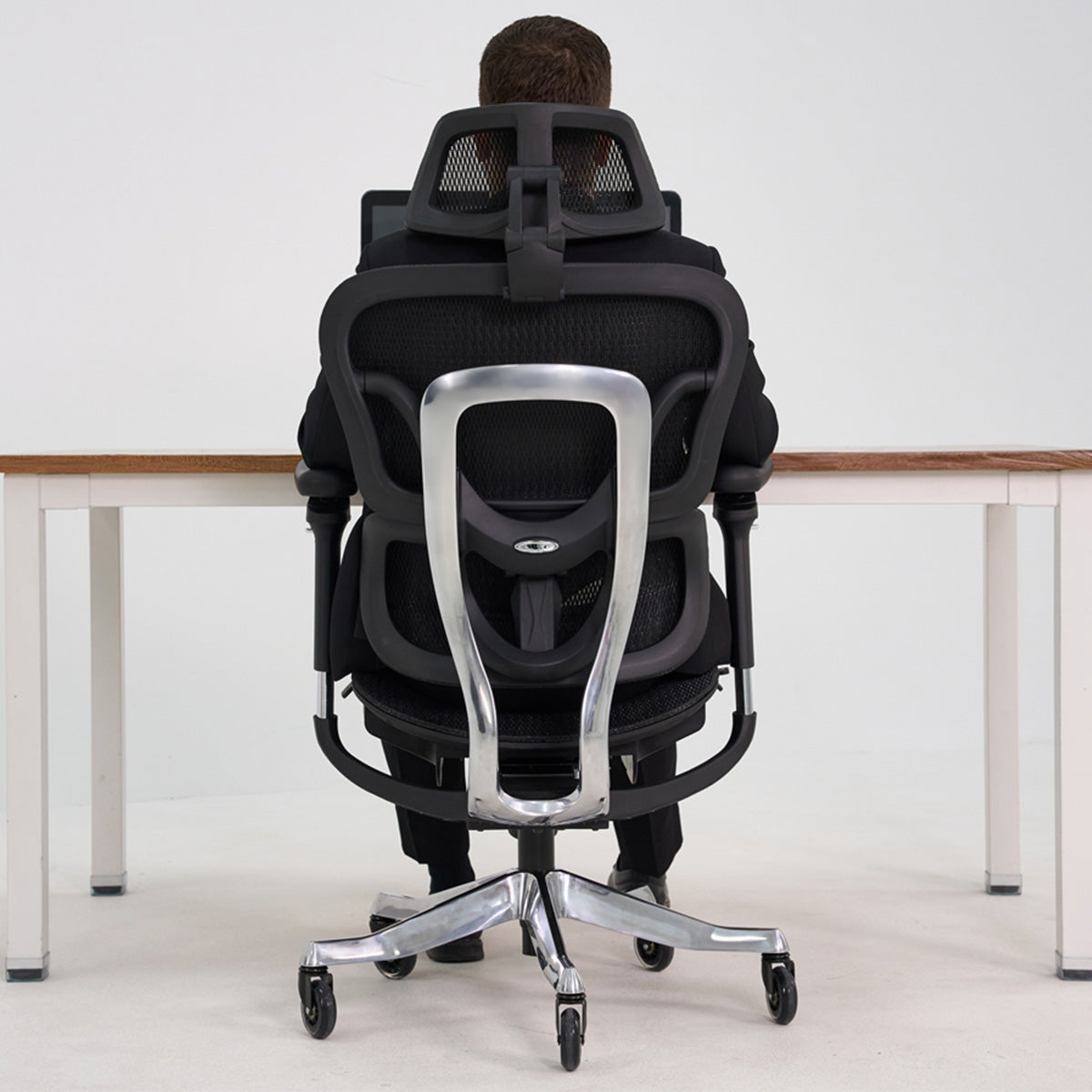
Integration’s Final Proof: The Silence of Self-Forgetting
The final evidence of integration is silence. Not just the silent roll of the 75mm PU casters, but the silence in your own mind. The distracting internal narration about discomfort ceases. What remains is the pure signal of your work. The chair has fulfilled its ultimate function: you no longer think about it. You are not negotiating with a mechanism—you are simply supported, free, and deeply at work. This is the moment the tool becomes an extension of the self.
BACK TO SHOP